Operation Systems
Design
I take user experience very seriously, down to the systems of operation in any team I connect with. I believe an efficiently streamlined project is a successful one.
Below are my system implementations for Elite’s Heat Press team, of which I was Lead Graphic Designer.
Terms to know
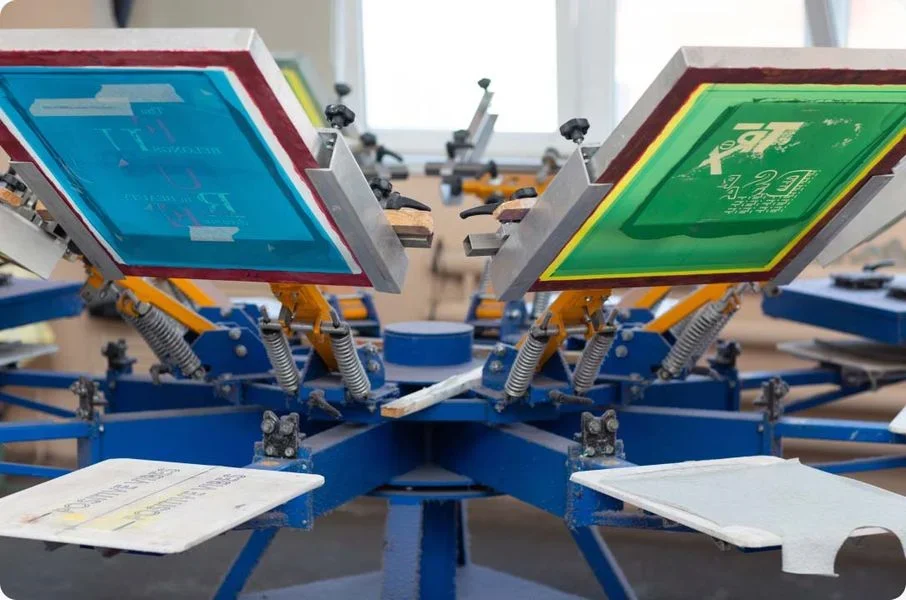
Screen printing (SP) – the process of using a mesh screen and a squeegee to imprint ink onto a garment
Heat pressing (HP) – the process of permanently stamping a design onto a garment
Embroidering (EMB) – the process of sewing designs onto garments with thread
My workflow solutions
My responsibilities at Elite consisted of Heat Press duties and helping with Screen Print duties on the Graphic Design team. I was also tasked with creating and managing online storefronts for customers, which consisted of creating several designs, mockups, inputing pricing and sizing, and many other duties.
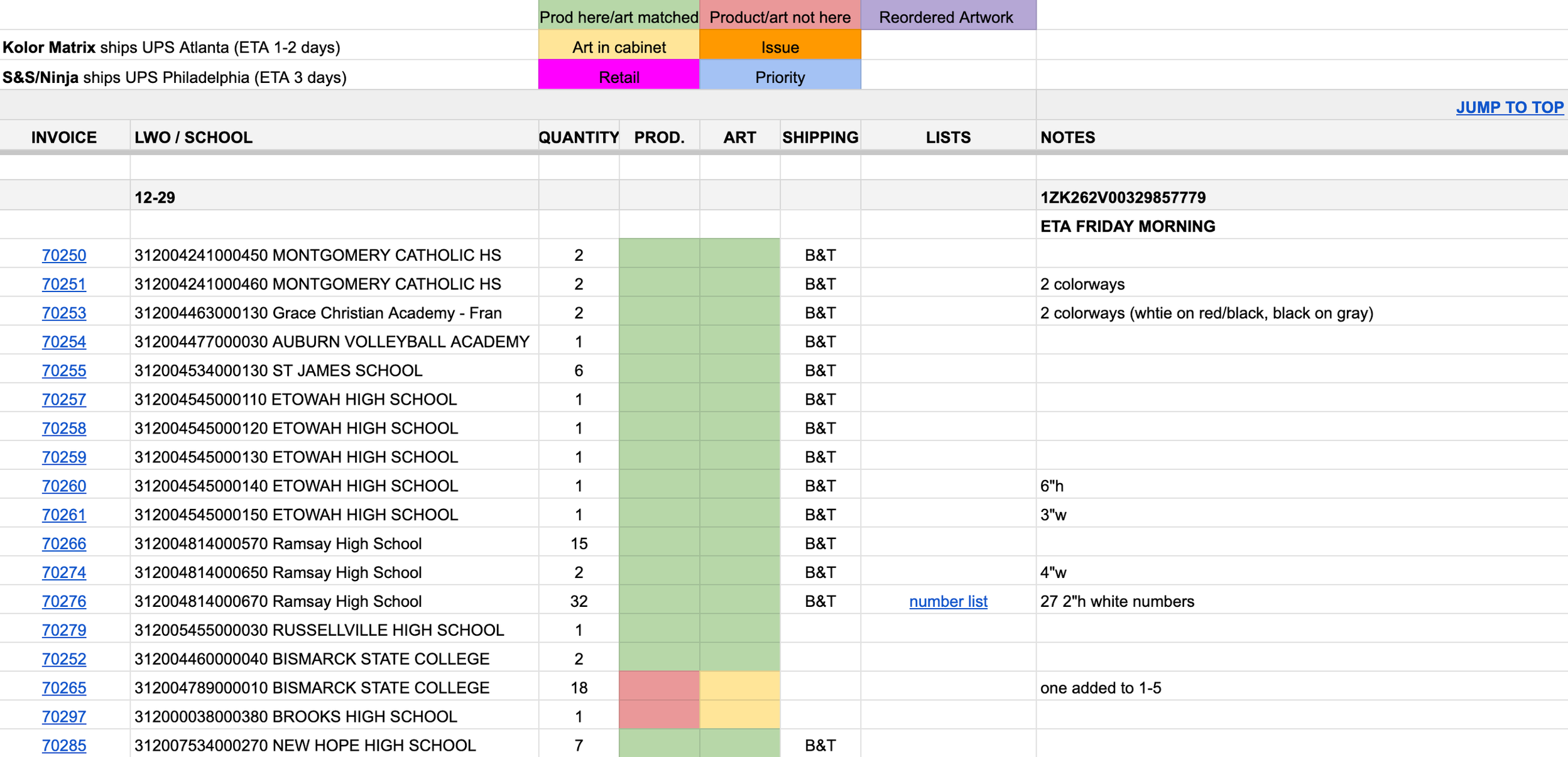
I implemented the system below to ease the Heat Press team’s pain points, prevent bottlenecks and errors. I taught myself Google Sheets to create this system, which features the school or order name, the LWO number, quantity, product status, DTF status, shipping type, any number lists and miscellaneous notes, and each order is linked for one-click access. This added some extra steps to my process but was well worth it for the good of the team.
I find that optimized systems of operation and clear communication improve every aspect of a business – the employees’ and the employer’s experiences, productivity, individual wellbeing, and these are crucial for success.
Separations (seps) – digital files created to separate each color in a design for screen printing in layers
Digital transfer fusion (DTF) – designs on film, ordered in large sheets of 240” and then cut and used in heat pressing
Run sheets – digital files created used for embroidery
Pain points
The previous system was arduous and time consuming for the heat presser and contributed to a lot of mistakes and delays.
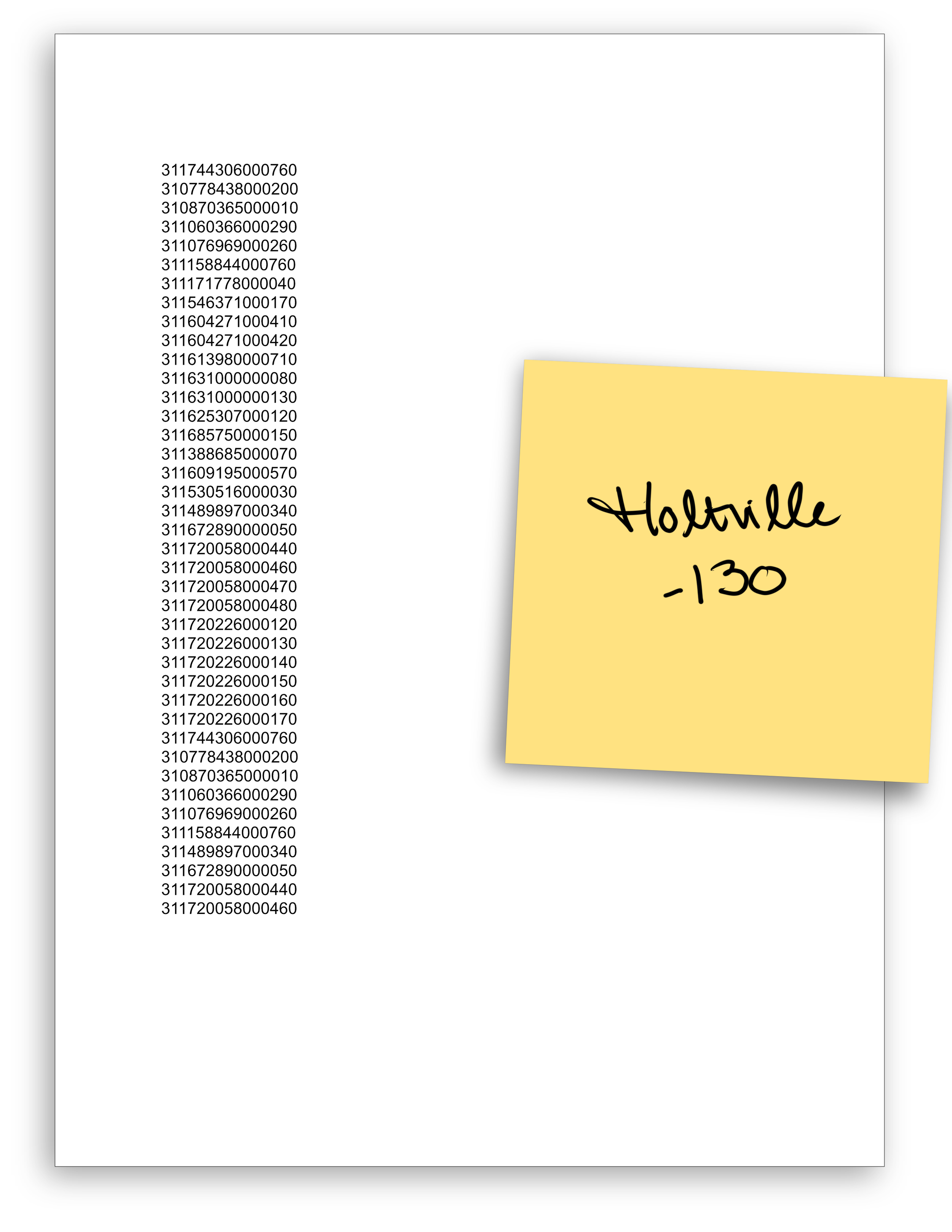
The heat presser’s process went as follows:
Spend hours hand typing 12 digit LWO numbers using a printed sheet for reference on an iPad
Write sticky notes and place them on cut out pieces of DTF
Match up the pieces to the appropriate boxes
Heat press DTF onto garments by order, hoping they were matched up correctly
This would often result in pressing the wrong design on a garment as many LWOs have similar digits and many orders have similar designs, then needing to reorder DTF and garments, resulting in time and money sinks.
The heat presser once pressed a sticky note onto a shirt that the previous designer stuck to the back of the DTF, embedding the sticky note onto the shirt, as she had not been able to see it below the design.
Productivity improvements
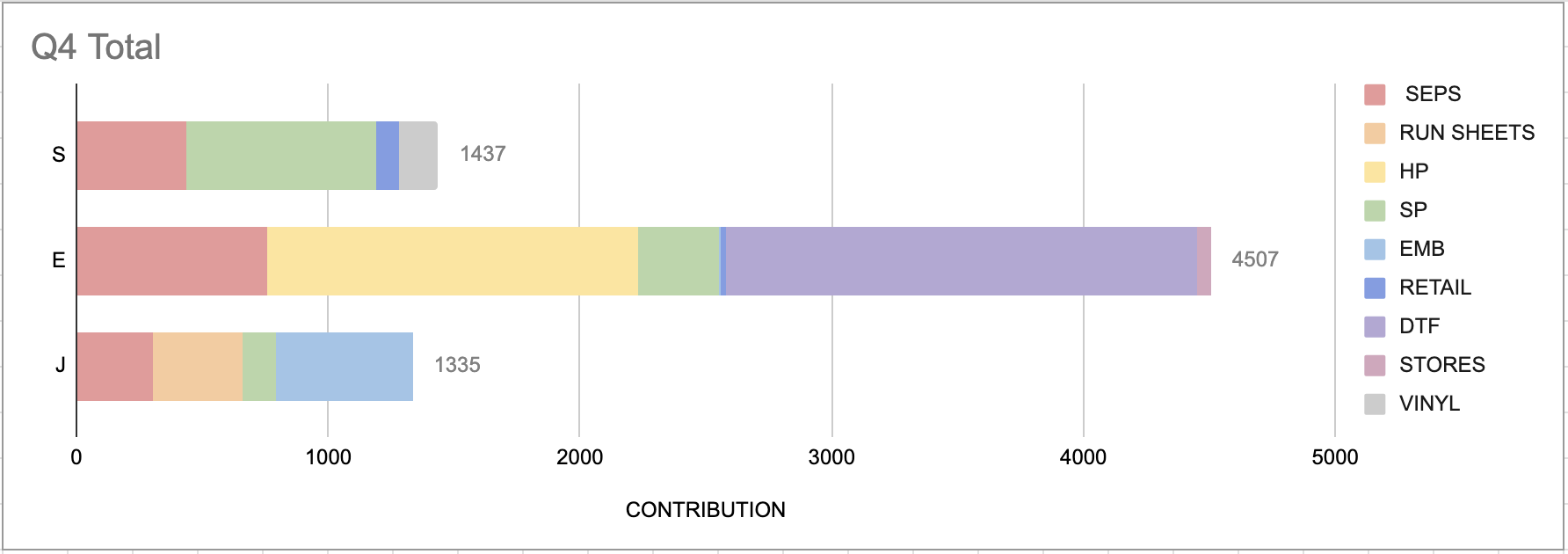
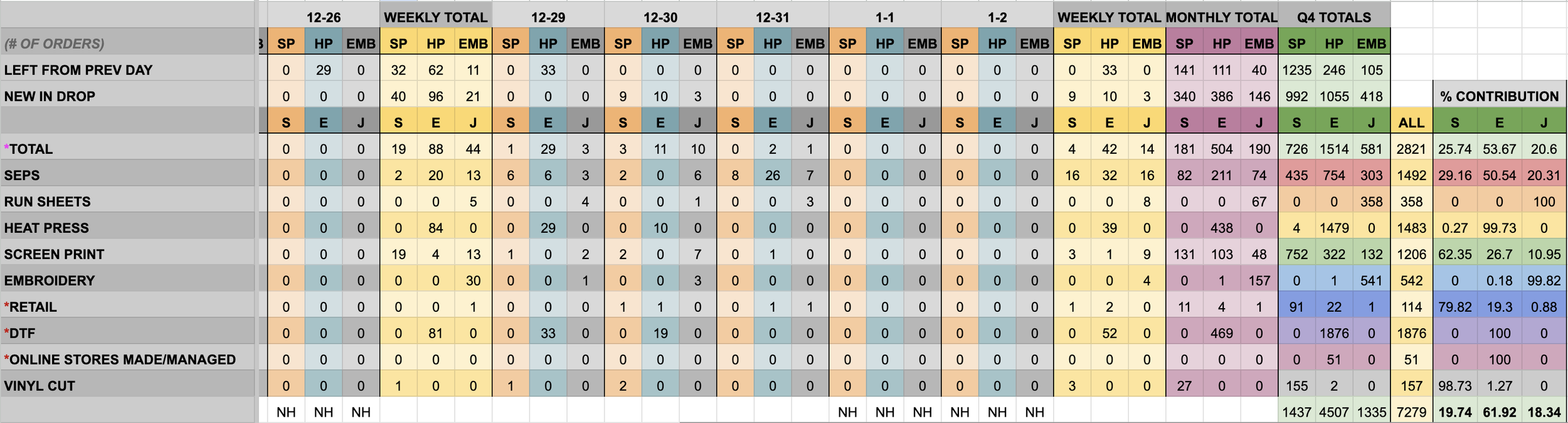
Below are the productivity metrics of my coworkers on the Graphic Design Team (S, J) and me (E). After implementation of my system, my output increased by about 20%, and the Heat Press team’s errors decreased by about 40%. I attribute these changes to this system. I brought similar system ideas to the rest of the Graphic Design team to implement at their discretion and suggested this technique to my superiors as well.